
Why Energy Efficiency Matters for Commercial Buildings
Energy-efficient commercial air conditioning systems are no longer optional for businesses in Johannesburg. Rising electricity costs and increasing environmental awareness mean companies must find smarter ways to cool their buildings without driving up operational expenses.
For offices, retail stores, warehouses, factories, and large commercial facilities, HVAC systems often account for a significant portion of monthly electricity consumption. Investing in energy-efficient solutions reduces long-term costs while improving system performance and reliability.
At MSDN Tech, we help businesses implement efficient commercial HVAC solutions designed to lower energy usage while maintaining optimal indoor comfort.
What Makes a Commercial Aircon System Energy-Efficient?
An energy-efficient system is designed to deliver maximum cooling output while using minimal electricity. Modern commercial systems achieve this through advanced technology such as inverter-driven compressors, smart thermostats, improved airflow design, and high-efficiency heat exchangers.
Proper system sizing also plays a critical role. Oversized or undersized systems consume more energy and experience increased wear and tear. A professional load assessment ensures the system matches the building’s specific cooling requirements.
Types of Energy-Efficient Commercial Systems
Several commercial air conditioning systems are known for their energy-saving capabilities.
VRV and VRF systems are among the most efficient options for large commercial buildings. These systems regulate refrigerant flow based on demand, allowing different areas of a building to maintain individual temperature settings without wasting energy.
Rooftop packaged units with high Seasonal Energy Efficiency Ratio (SEER) ratings also offer strong performance for office blocks and retail spaces. Ducted inverter systems are another effective solution for warehouses and industrial facilities where consistent airflow is required.
Choosing the correct system depends on building size, usage patterns, and cooling demands.
The Role of Smart Controls and Automation
Smart thermostats and building management systems significantly improve HVAC efficiency. These systems automatically adjust cooling levels based on occupancy, time of day, and external temperatures.
Automation prevents unnecessary energy consumption during non-operational hours and ensures consistent indoor climate control. For large commercial properties in Johannesburg, integrating HVAC systems with smart controls can lead to substantial energy savings over time.
Preventative Maintenance Improves Efficiency
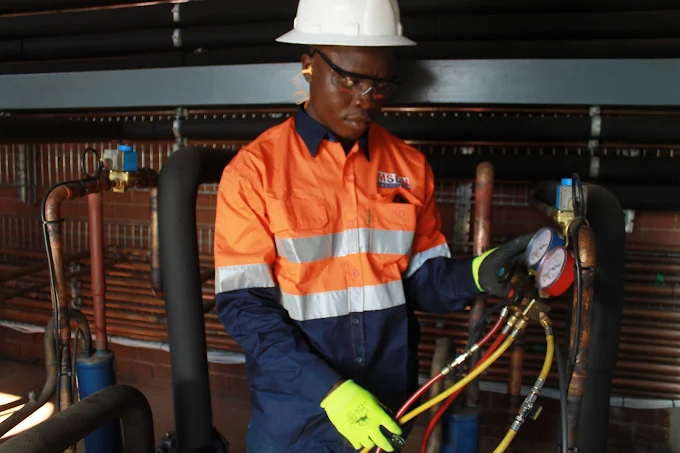
Even the most advanced commercial air conditioning system will lose efficiency without proper maintenance. Dirty filters, clogged coils, refrigerant leaks, and faulty electrical components increase energy consumption and reduce cooling capacity.
Routine inspections, cleaning, and performance testing keep systems operating at peak efficiency. Preventative maintenance not only reduces energy bills but also extends the lifespan of expensive HVAC equipment.
Long-Term Cost Savings for Businesses
Although energy-efficient commercial air conditioning systems may require a higher initial investment, the long-term savings are significant. Reduced electricity consumption lowers monthly utility costs. Efficient systems also experience fewer breakdowns, decreasing repair expenses and minimising downtime.
For warehouses, factories, and office buildings, improved temperature control enhances employee productivity and protects temperature-sensitive equipment or stock.
Environmental and Compliance Benefits
Energy-efficient HVAC systems reduce carbon emissions and support environmental sustainability goals. Many businesses are now prioritising green building practices to comply with regulations and meet corporate responsibility targets.
By upgrading to modern, efficient cooling systems, companies in Johannesburg position themselves as forward-thinking and environmentally responsible.
Final Thoughts
Energy-efficient commercial air conditioning systems are a smart investment for any business looking to reduce operational costs and improve performance. From advanced VRV and VRF systems to smart automation and preventative maintenance, the right HVAC strategy can significantly impact long-term success.
By working with experienced commercial HVAC specialists, businesses can ensure proper system design, professional installation, and ongoing maintenance that maximises efficiency throughout the year.